
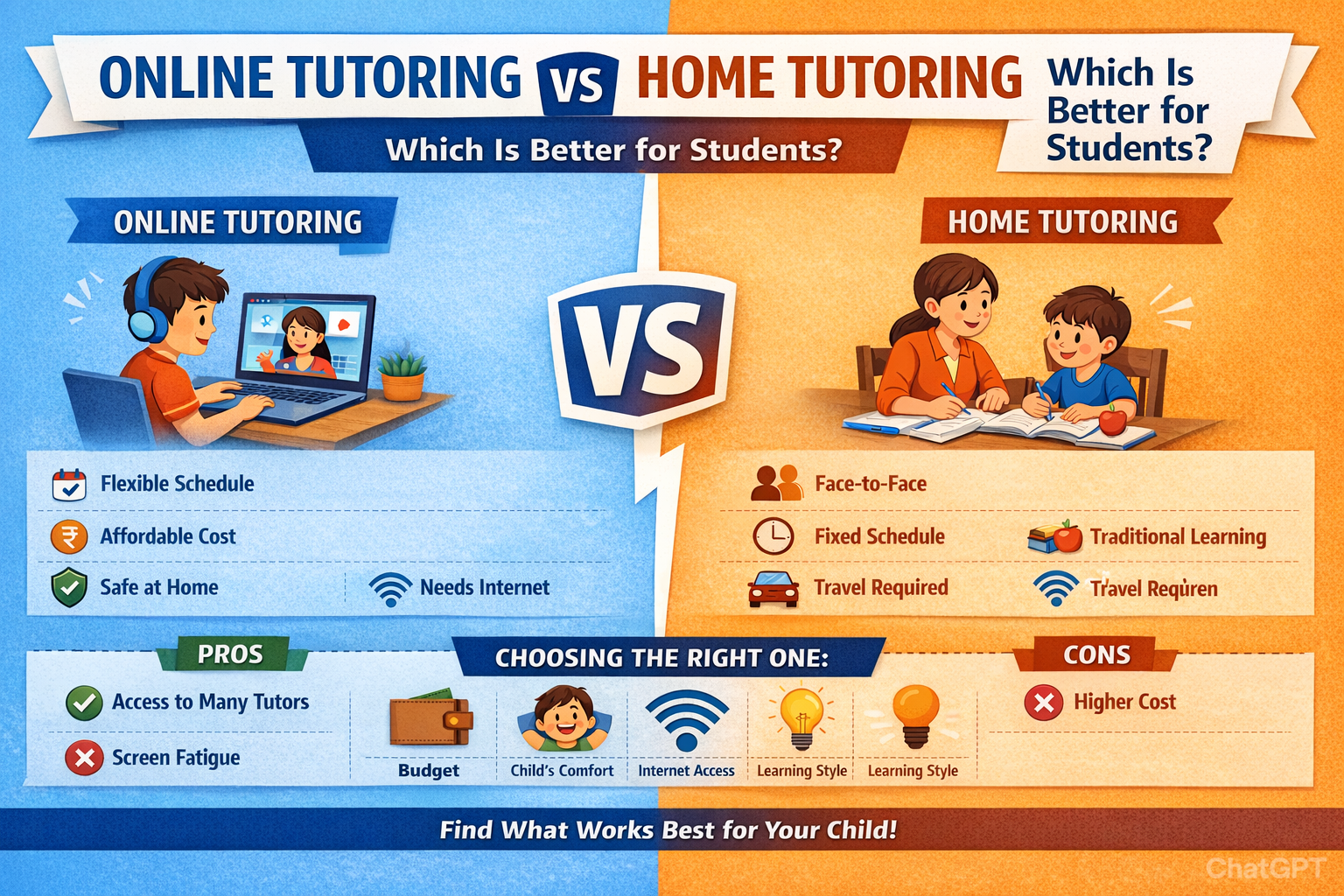
Education has changed a lot in the last few years. With technology growing fast and parents becoming more aware of learning options, the debate between online tutoring vs home tutoring has become more important than ever.
If you’re a parent trying to choose the best option for your child, or a student looking for extra support, this guide will help you understand both clearly, in simple and practical terms.
Let’s break it down 👇
Online tutoring is when students learn through the internet using platforms like Zoom, Google Meet, or dedicated learning apps. The tutor and student connect virtually from different locations.
Key Features of Online Tutoring:
Classes through video calls
Digital whiteboards and screen sharing
Recorded sessions (sometimes available)
Flexible scheduling
Access to tutors from different cities or countries
Home tutoring (also called private tutoring at home) is when a tutor visits the student’s house and teaches them face-to-face.
Key Features of Home Tutoring:
In-person interaction
Personal attention
Fixed schedule
Physical books and notebooks
Traditional classroom-like feel
Now let’s compare them based on important factors.
1. Flexibility
Online Tutoring:
✔ Very flexible
✔ Easy to reschedule
✔ No travel time
Students can attend classes from anywhere — even while travelling.
Home Tutoring:
✘ Fixed timing
✘ Depends on tutor availability
✘ Travel delays possible
👉 If flexibility matters, online tutoring wins.
2. Cost Comparison
Online tutoring is usually more affordable because:
No travel expenses
Lower overhead costs
More tutor options available
Home tutors often charge more because they travel to your house.
👉 Budget-friendly option? Online tutoring.
3. Personal Attention
Both offer one-on-one learning.
However:
Home tutoring feels more personal due to physical presence.
Online tutoring can be equally effective if the tutor uses interactive tools.
👉 For shy students, online tutoring sometimes feels more comfortable.
4. Safety & Convenience
Online Tutoring:
No outsider is entering your home.
Safe for children
Parents can monitor easily.
Home Tutoring:
Requires trust in the tutor
Needs supervision
👉 Online tutoring provides better safety and convenience.
5. Learning Experience
Online learning includes:
Digital tools
Animated explanations
Recorded sessions
Screen sharing
Interactive quizzes
Home tutoring includes:
Face-to-face explanation
Traditional writing practice
Immediate physical correction
👉 Tech-friendly students may prefer online learning.
6. Internet Dependency
This is important.
Online tutoring requires a stable internet.
Home tutoring does not depend on technology.
If internet issues are common in your area, home tutoring might be better.
Pros and Cons Summary
✅ Online Tutoring Pros:
Affordable
Flexible
Safe
Wide tutor selection
Access to recorded lessons
❌ Online Tutoring Cons:
Requires internet
Can cause screen fatigue
✅ Home Tutoring Pros:
Direct human interaction
Traditional learning comfort
No screen time
❌ Home Tutoring Cons:
Expensive
Less flexible
Travel delays
The answer depends on:
Your budget
Your child’s comfort level
Internet availability
Learning style
Academic goals
👉 For competitive exams and advanced subjects, online tutoring often provides access to expert teachers from across the country.
👉 For younger children who need supervision, home tutoring may feel more comfortable.
In 2026, online tutoring is becoming more popular because it is flexible, affordable, and convenient. However, home tutoring still works well for students who need in-person guidance and structured discipline.
There is no “one-size-fits-all” answer.
The best choice is the one that helps your child learn confidently and comfortably.